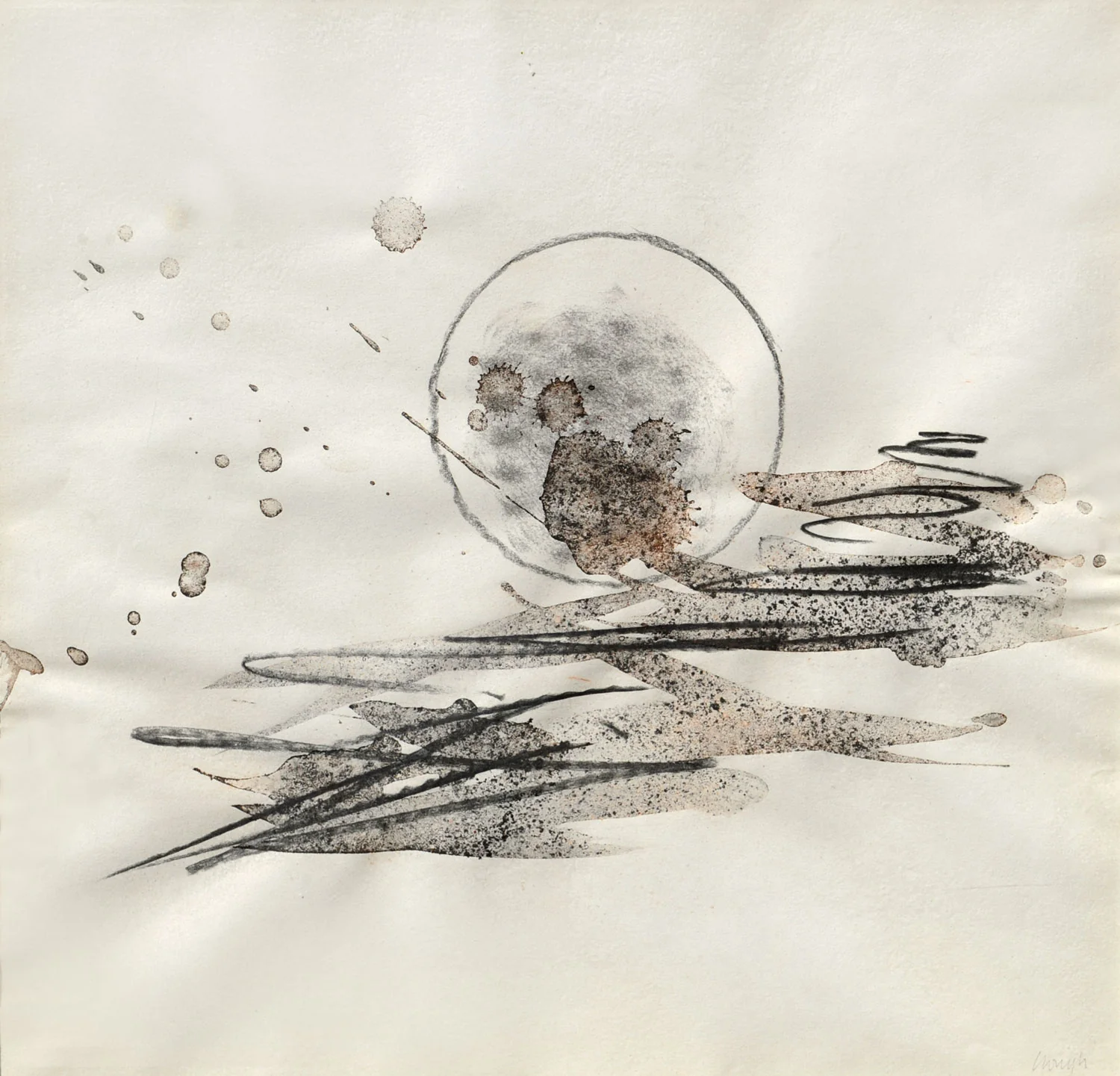
Did you say stony moon?
Gifted to John Ball and Gordon Hargreaves, label verso: for Gordon and John in the new place, best wishes Pru Anthony Hepworth label verso: Provenance, Hargreaves and Ball Charitable Trust.
Hargreaves and his partner Ball (both eminent scientists)were close friends and supporters of Prunella Clough.
Critically acclaimed as one of the most interesting artists of the British post-war period, Clough devoted her career to finding beauty in unconsidered aspects of the urban and industrial landscape.
Towards the end of her life she became regarded largely as an abstractionist, but her work always retained a figurative base.
Hargreaves and his partner Ball (both eminent scientists)were close friends and supporters of Prunella Clough.
Critically acclaimed as one of the most interesting artists of the British post-war period, Clough devoted her career to finding beauty in unconsidered aspects of the urban and industrial landscape.
Towards the end of her life she became regarded largely as an abstractionist, but her work always retained a figurative base.
$6,370.67
Did you say stony moon?—
$6,370.67
Product Information
Product Information
Shipping & Returns
Shipping & Returns
Description
Gifted to John Ball and Gordon Hargreaves, label verso: for Gordon and John in the new place, best wishes Pru Anthony Hepworth label verso: Provenance, Hargreaves and Ball Charitable Trust.
Hargreaves and his partner Ball (both eminent scientists)were close friends and supporters of Prunella Clough.
Critically acclaimed as one of the most interesting artists of the British post-war period, Clough devoted her career to finding beauty in unconsidered aspects of the urban and industrial landscape.
Towards the end of her life she became regarded largely as an abstractionist, but her work always retained a figurative base.
Hargreaves and his partner Ball (both eminent scientists)were close friends and supporters of Prunella Clough.
Critically acclaimed as one of the most interesting artists of the British post-war period, Clough devoted her career to finding beauty in unconsidered aspects of the urban and industrial landscape.
Towards the end of her life she became regarded largely as an abstractionist, but her work always retained a figurative base.