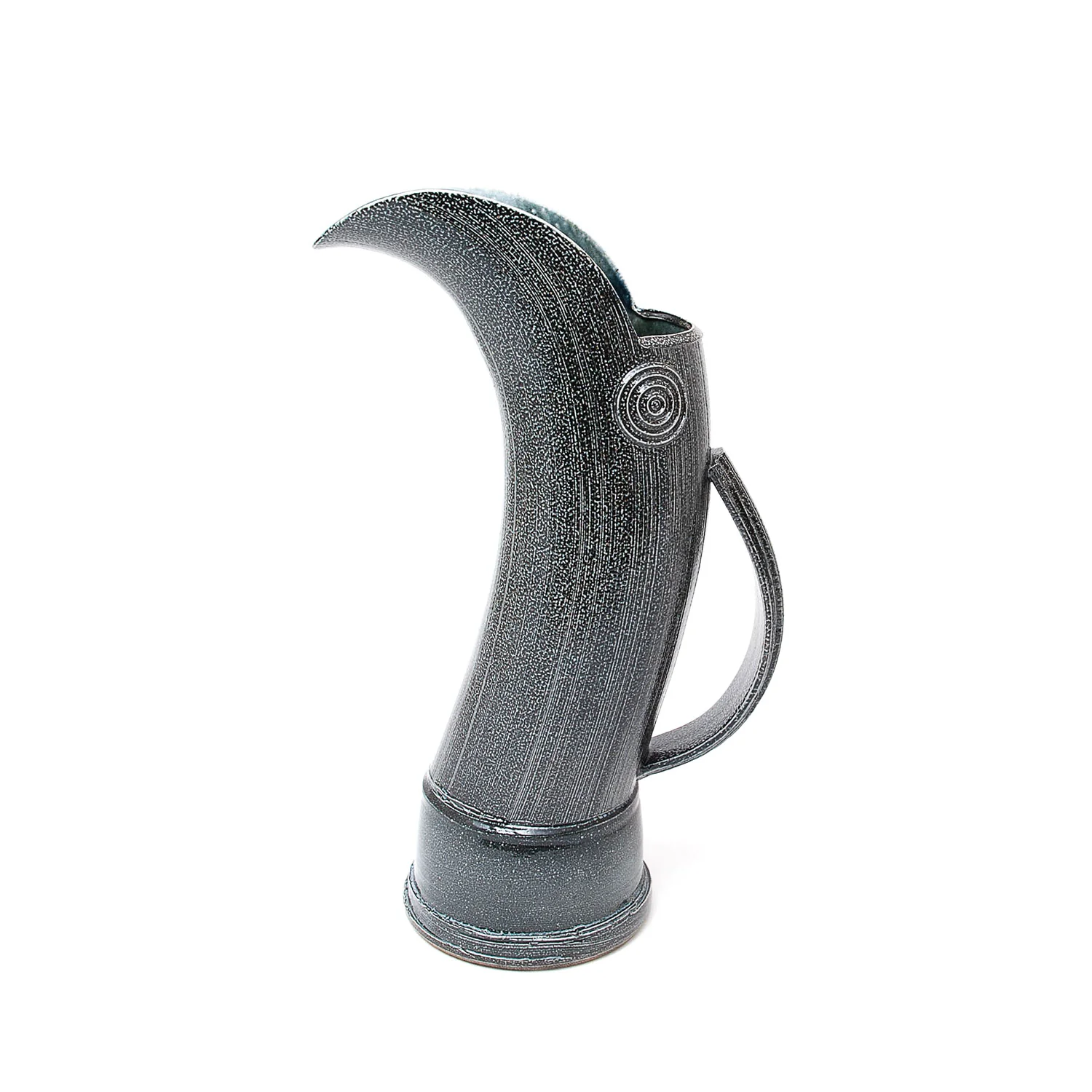
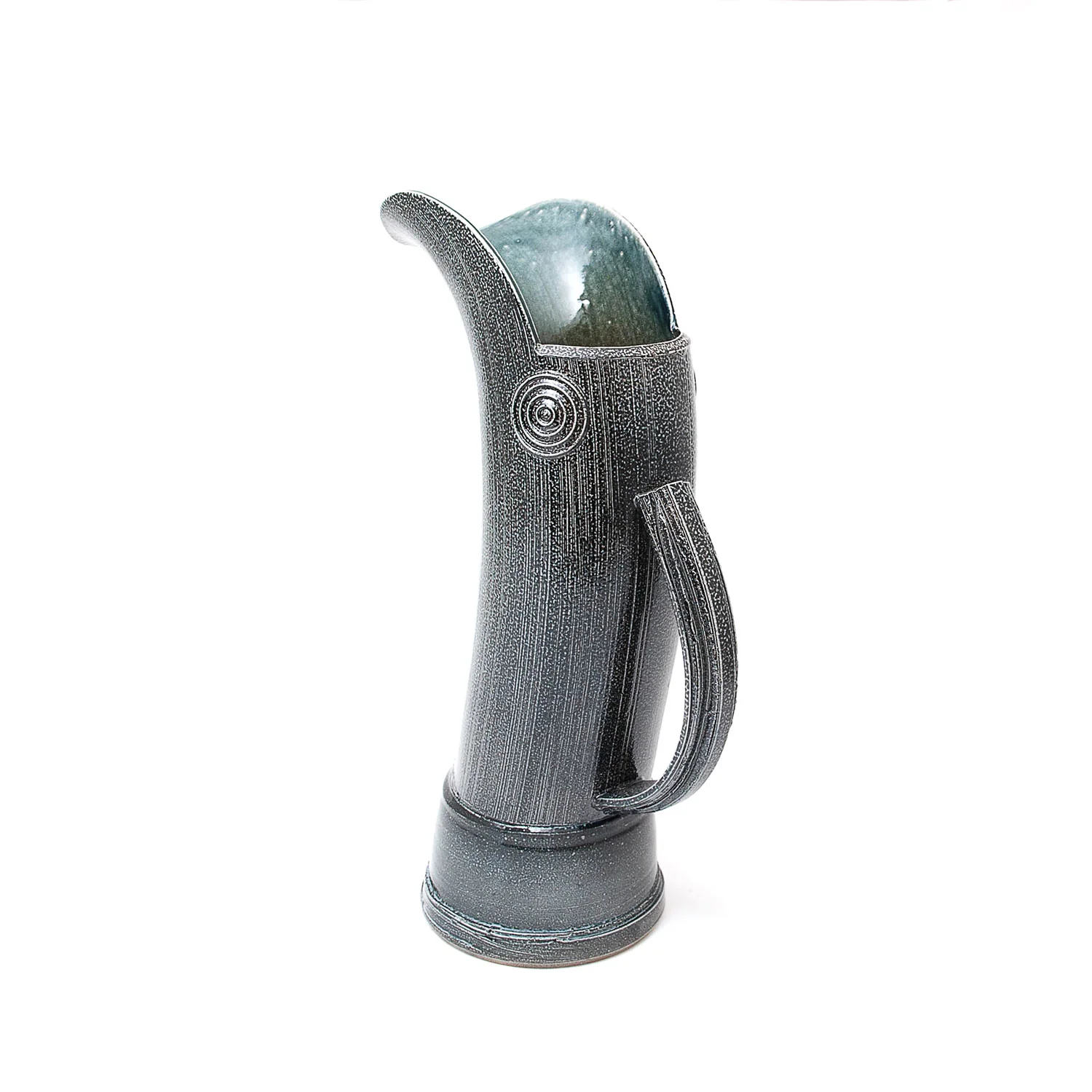
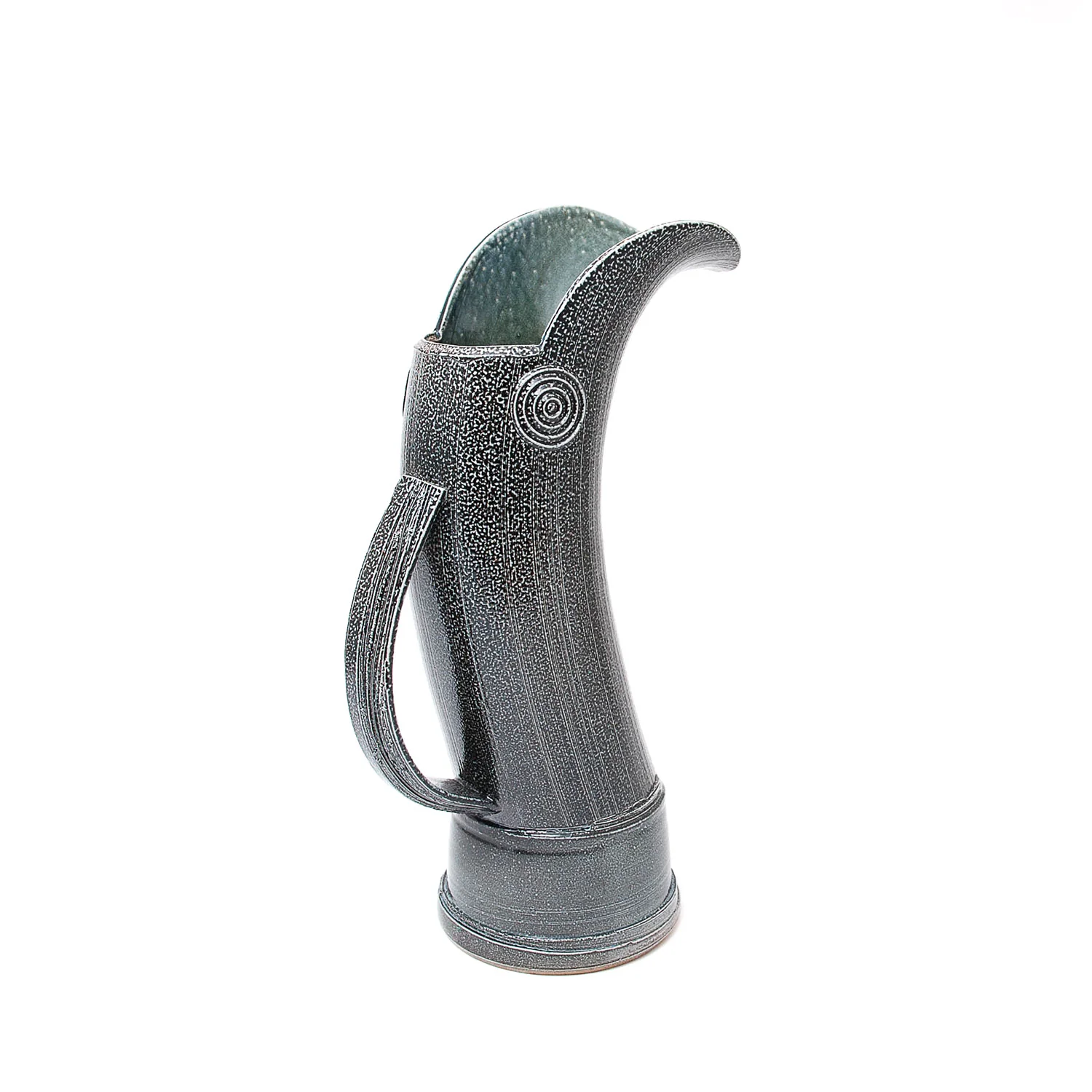
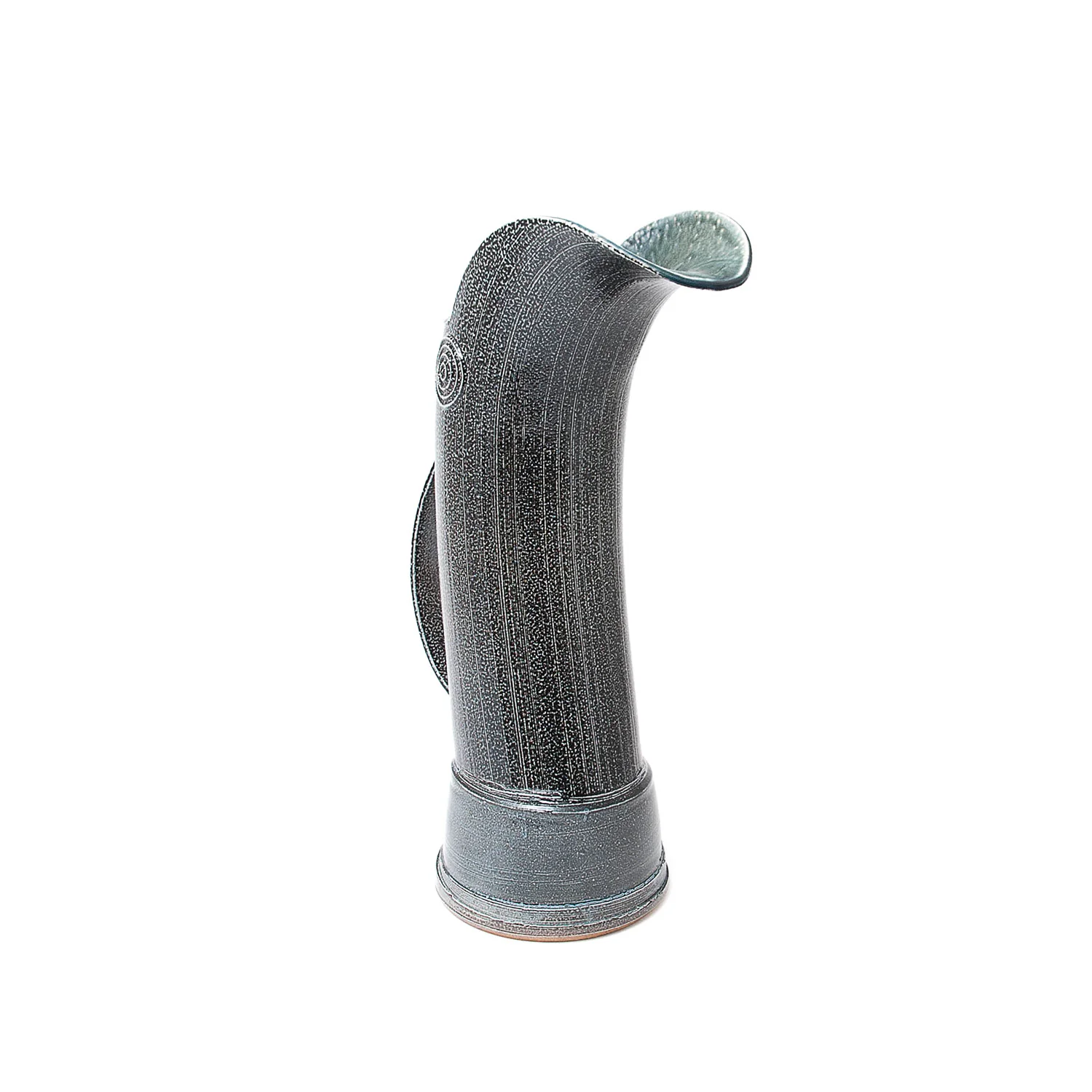
Large Extruded Jug with Thrown Base
Black stain. Saltglaze
Extruded forms are synonymous with Keeler's work. In particular the strong sweeping forms of the jugs, with spouts an integral part of the body, rather than being added later. The forms are made by pushing the clay through a die of the desired size and shape using a wall mounted extruder.
Salt glaze is not applied to the pot but occurs as a result of chemical reactions during the firing itself. Salt is thrown into the kiln as it arrives at its peak temperatures and vaporises. The sodium within the salt then combines with silica in the clay to form a glaze surface.
Potters often talk about the desired ‘orange peel’ effect of salt fired pots, where the glaze surface appears pitted and bumpy. Potters who salt fire also often make use of clay bodies and slips which contain iron or cobalt, lending their surfaces a rich dark red or blue colour.
Extruded forms are synonymous with Keeler's work. In particular the strong sweeping forms of the jugs, with spouts an integral part of the body, rather than being added later. The forms are made by pushing the clay through a die of the desired size and shape using a wall mounted extruder.
Salt glaze is not applied to the pot but occurs as a result of chemical reactions during the firing itself. Salt is thrown into the kiln as it arrives at its peak temperatures and vaporises. The sodium within the salt then combines with silica in the clay to form a glaze surface.
Potters often talk about the desired ‘orange peel’ effect of salt fired pots, where the glaze surface appears pitted and bumpy. Potters who salt fire also often make use of clay bodies and slips which contain iron or cobalt, lending their surfaces a rich dark red or blue colour.
$4,460.27
Large Extruded Jug with Thrown Base—
$4,460.27
Product Information
Product Information
Shipping & Returns
Shipping & Returns
Description
Black stain. Saltglaze
Extruded forms are synonymous with Keeler's work. In particular the strong sweeping forms of the jugs, with spouts an integral part of the body, rather than being added later. The forms are made by pushing the clay through a die of the desired size and shape using a wall mounted extruder.
Salt glaze is not applied to the pot but occurs as a result of chemical reactions during the firing itself. Salt is thrown into the kiln as it arrives at its peak temperatures and vaporises. The sodium within the salt then combines with silica in the clay to form a glaze surface.
Potters often talk about the desired ‘orange peel’ effect of salt fired pots, where the glaze surface appears pitted and bumpy. Potters who salt fire also often make use of clay bodies and slips which contain iron or cobalt, lending their surfaces a rich dark red or blue colour.
Extruded forms are synonymous with Keeler's work. In particular the strong sweeping forms of the jugs, with spouts an integral part of the body, rather than being added later. The forms are made by pushing the clay through a die of the desired size and shape using a wall mounted extruder.
Salt glaze is not applied to the pot but occurs as a result of chemical reactions during the firing itself. Salt is thrown into the kiln as it arrives at its peak temperatures and vaporises. The sodium within the salt then combines with silica in the clay to form a glaze surface.
Potters often talk about the desired ‘orange peel’ effect of salt fired pots, where the glaze surface appears pitted and bumpy. Potters who salt fire also often make use of clay bodies and slips which contain iron or cobalt, lending their surfaces a rich dark red or blue colour.