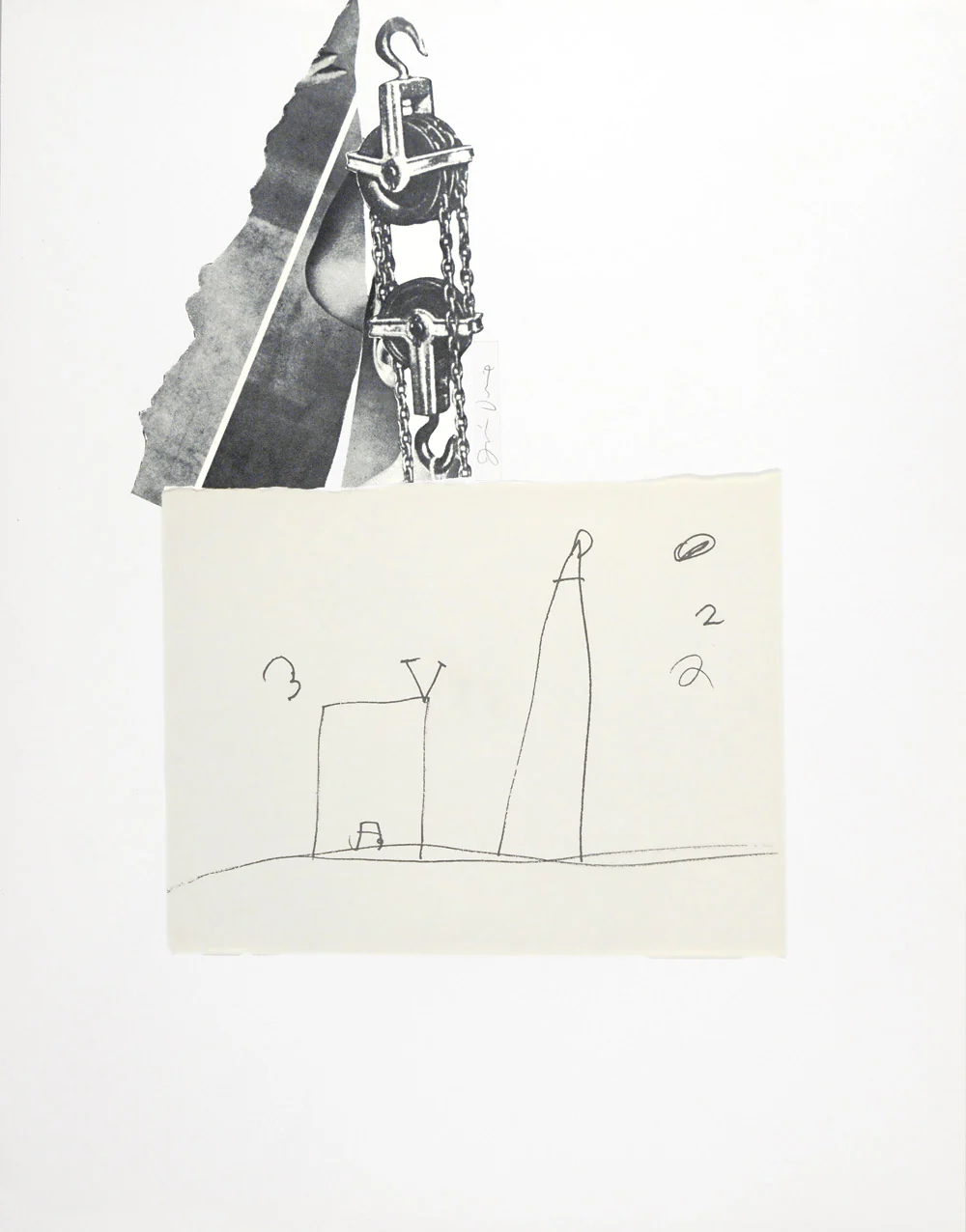
Tool Box V (Child Drawing)
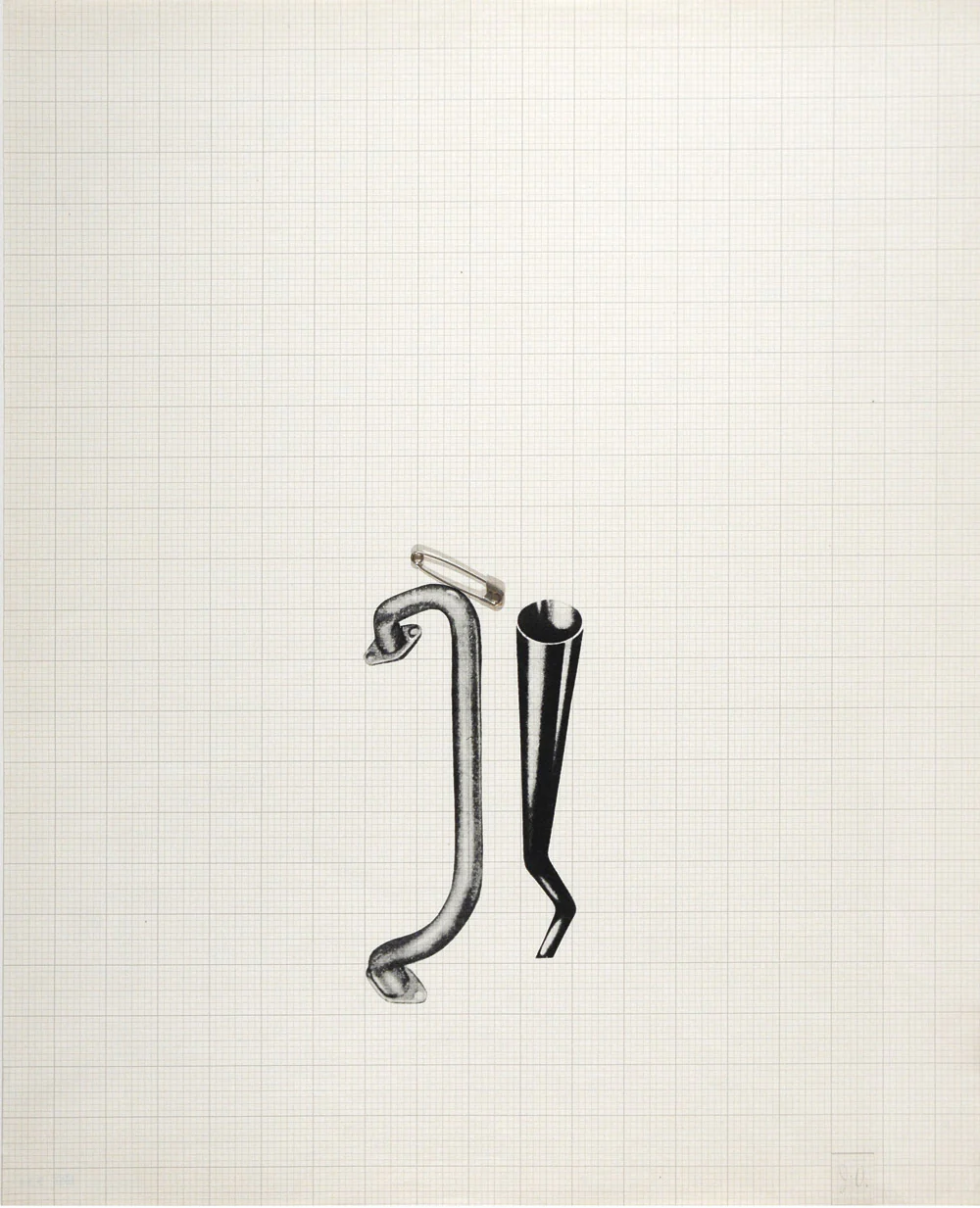
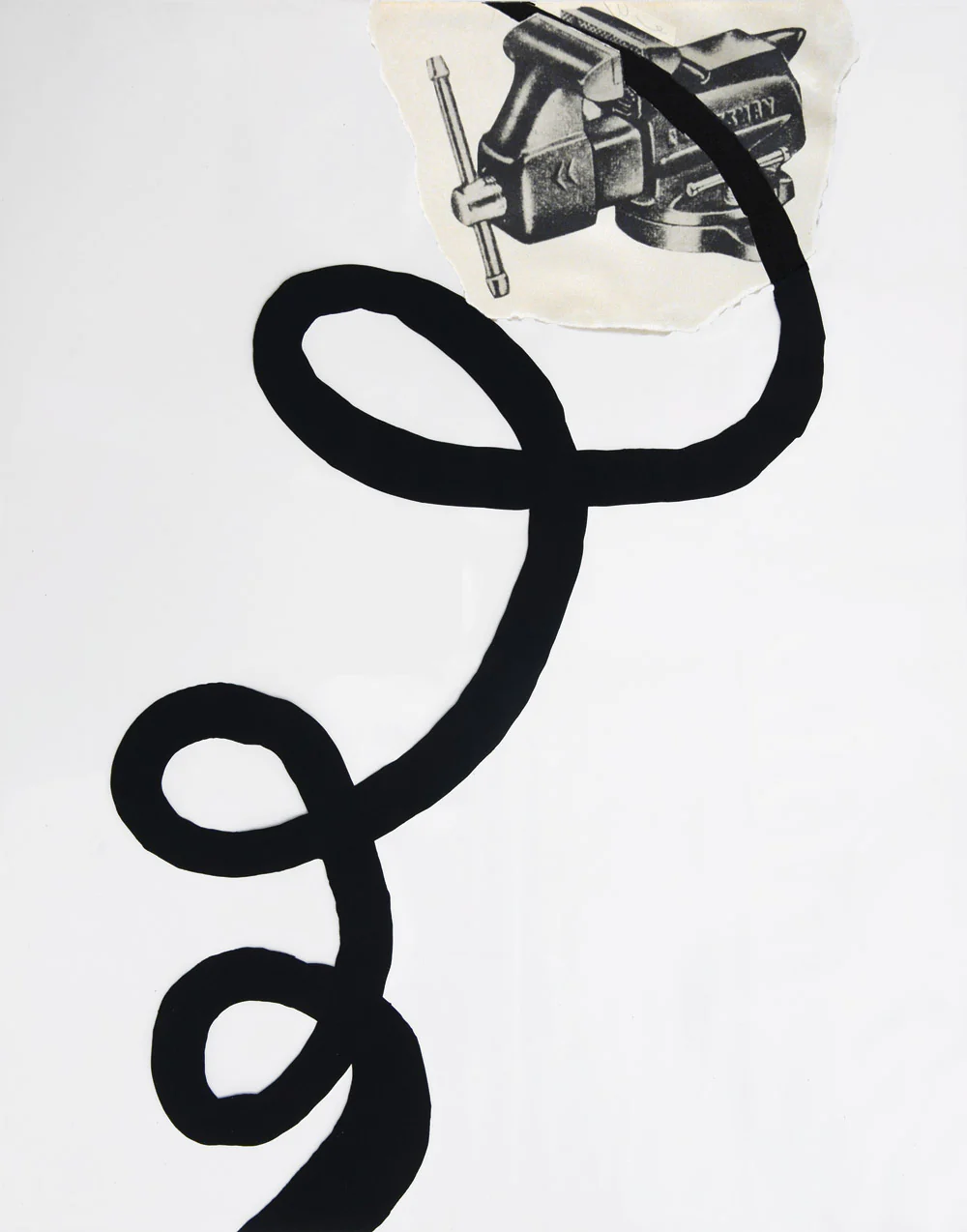
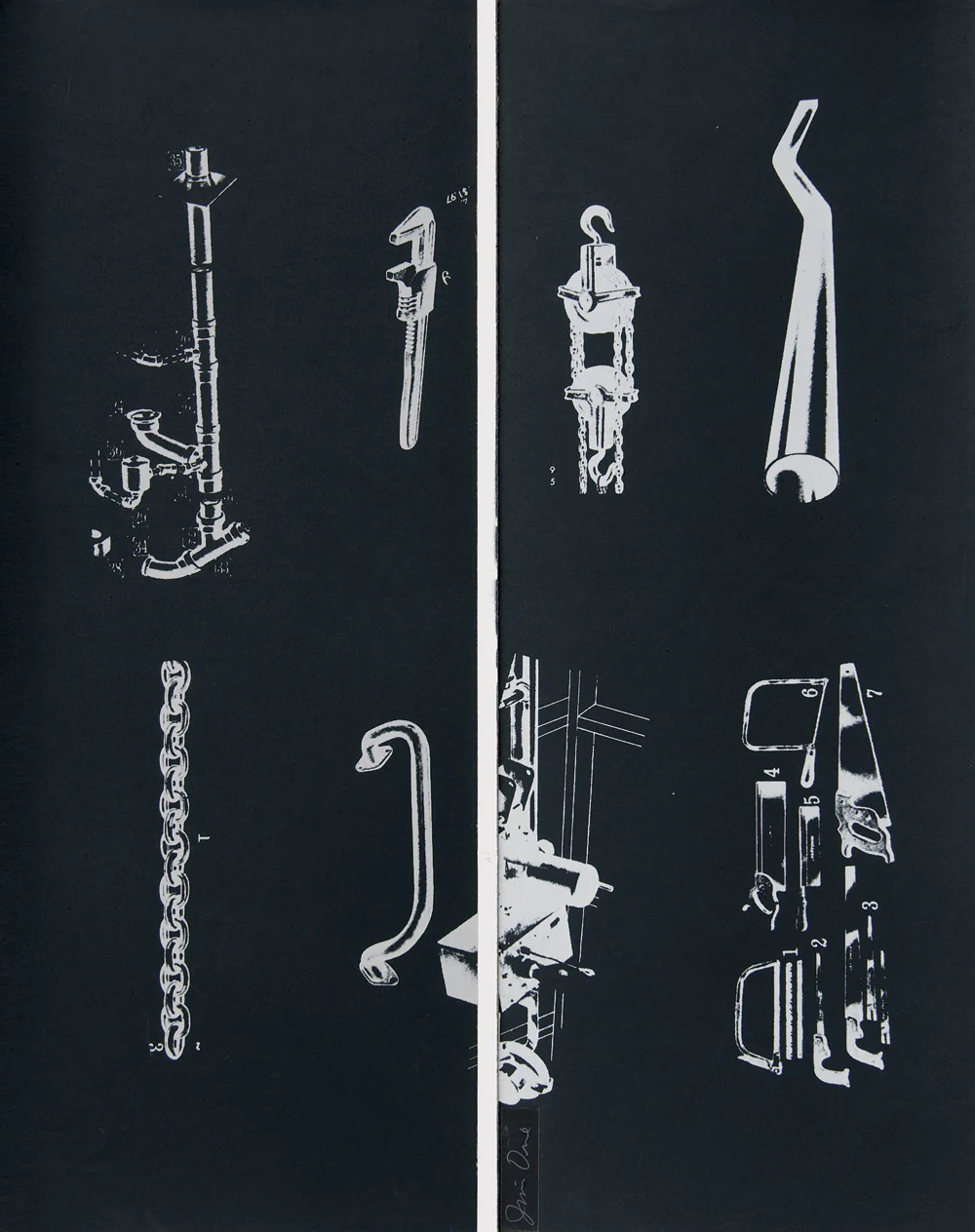
Screenprint with photographic element, and collaged drawing, printed in black on ivorette 6 sheet board.
Signed, edition number on the back of the work.
1966 saw Dine in Swinging London and he soon became caught up in the flourishing printmaking activity at Editions Alecto and Kelpra Studio. It was here that his first portfolio, A Tool Box, was produced, printed by master printer, Chris Prater. The series contains a plethora of complex images taken from industrial design magazines and archaic engineering text-books in addition to images like Donald Duck, an echo of Dine's American upbringing.
The later prints of the series tend to focus on one image of tools, giving the subject matter an iconic feel. Surrounded by tools from an early age (both Dine's grandfather and his father owned hardware stores) the artist recalls:
...the tools were always available for me to play with … It wasn't or isn't the craftsmanship that interests me, but the juxtaposition of tools.
As well as the traditional techniques associated with screenprints, Dine also incorporated plastic sheet and graphpaper, strips of differently coloured cardboard, a real metal safety pin - even his signature for each print is on a separate piece of paper added to the prints.
As an art form the collage is a medium with which Dine became adept, as well as developing it to his own particular ends. On the surface these prints, like his paintings to which objects are attached, seem to lack subtlety and to combine images illogically. But despite any irregularity in the way the images are brought together, they are, in fact, skillfully controlled within a compositional arrangement that is often very formal. It is as if Dine is careful not to emphasise any possible shock effect that his use of ready made objects may have. While Dine's works may reflect a latter-day Dada influence, his intention seems much less nihilistic. What is more to the point is the conflicting sets of values that Dine underlines in his work. While seemingly self-contradictory, there is a deliberate play between images left in a raw state (be they actual objects or photographs) and illusionistic images that are often intentionally kept ambiguous.
Signed, edition number on the back of the work.
1966 saw Dine in Swinging London and he soon became caught up in the flourishing printmaking activity at Editions Alecto and Kelpra Studio. It was here that his first portfolio, A Tool Box, was produced, printed by master printer, Chris Prater. The series contains a plethora of complex images taken from industrial design magazines and archaic engineering text-books in addition to images like Donald Duck, an echo of Dine's American upbringing.
The later prints of the series tend to focus on one image of tools, giving the subject matter an iconic feel. Surrounded by tools from an early age (both Dine's grandfather and his father owned hardware stores) the artist recalls:
...the tools were always available for me to play with … It wasn't or isn't the craftsmanship that interests me, but the juxtaposition of tools.
As well as the traditional techniques associated with screenprints, Dine also incorporated plastic sheet and graphpaper, strips of differently coloured cardboard, a real metal safety pin - even his signature for each print is on a separate piece of paper added to the prints.
As an art form the collage is a medium with which Dine became adept, as well as developing it to his own particular ends. On the surface these prints, like his paintings to which objects are attached, seem to lack subtlety and to combine images illogically. But despite any irregularity in the way the images are brought together, they are, in fact, skillfully controlled within a compositional arrangement that is often very formal. It is as if Dine is careful not to emphasise any possible shock effect that his use of ready made objects may have. While Dine's works may reflect a latter-day Dada influence, his intention seems much less nihilistic. What is more to the point is the conflicting sets of values that Dine underlines in his work. While seemingly self-contradictory, there is a deliberate play between images left in a raw state (be they actual objects or photographs) and illusionistic images that are often intentionally kept ambiguous.
$1,274.33
Original: $3,640.95
-65%Tool Box V (Child Drawing)—
$3,640.95
$1,274.33Product Information
Product Information
Shipping & Returns
Shipping & Returns
Description
Screenprint with photographic element, and collaged drawing, printed in black on ivorette 6 sheet board.
Signed, edition number on the back of the work.
1966 saw Dine in Swinging London and he soon became caught up in the flourishing printmaking activity at Editions Alecto and Kelpra Studio. It was here that his first portfolio, A Tool Box, was produced, printed by master printer, Chris Prater. The series contains a plethora of complex images taken from industrial design magazines and archaic engineering text-books in addition to images like Donald Duck, an echo of Dine's American upbringing.
The later prints of the series tend to focus on one image of tools, giving the subject matter an iconic feel. Surrounded by tools from an early age (both Dine's grandfather and his father owned hardware stores) the artist recalls:
...the tools were always available for me to play with … It wasn't or isn't the craftsmanship that interests me, but the juxtaposition of tools.
As well as the traditional techniques associated with screenprints, Dine also incorporated plastic sheet and graphpaper, strips of differently coloured cardboard, a real metal safety pin - even his signature for each print is on a separate piece of paper added to the prints.
As an art form the collage is a medium with which Dine became adept, as well as developing it to his own particular ends. On the surface these prints, like his paintings to which objects are attached, seem to lack subtlety and to combine images illogically. But despite any irregularity in the way the images are brought together, they are, in fact, skillfully controlled within a compositional arrangement that is often very formal. It is as if Dine is careful not to emphasise any possible shock effect that his use of ready made objects may have. While Dine's works may reflect a latter-day Dada influence, his intention seems much less nihilistic. What is more to the point is the conflicting sets of values that Dine underlines in his work. While seemingly self-contradictory, there is a deliberate play between images left in a raw state (be they actual objects or photographs) and illusionistic images that are often intentionally kept ambiguous.
Signed, edition number on the back of the work.
1966 saw Dine in Swinging London and he soon became caught up in the flourishing printmaking activity at Editions Alecto and Kelpra Studio. It was here that his first portfolio, A Tool Box, was produced, printed by master printer, Chris Prater. The series contains a plethora of complex images taken from industrial design magazines and archaic engineering text-books in addition to images like Donald Duck, an echo of Dine's American upbringing.
The later prints of the series tend to focus on one image of tools, giving the subject matter an iconic feel. Surrounded by tools from an early age (both Dine's grandfather and his father owned hardware stores) the artist recalls:
...the tools were always available for me to play with … It wasn't or isn't the craftsmanship that interests me, but the juxtaposition of tools.
As well as the traditional techniques associated with screenprints, Dine also incorporated plastic sheet and graphpaper, strips of differently coloured cardboard, a real metal safety pin - even his signature for each print is on a separate piece of paper added to the prints.
As an art form the collage is a medium with which Dine became adept, as well as developing it to his own particular ends. On the surface these prints, like his paintings to which objects are attached, seem to lack subtlety and to combine images illogically. But despite any irregularity in the way the images are brought together, they are, in fact, skillfully controlled within a compositional arrangement that is often very formal. It is as if Dine is careful not to emphasise any possible shock effect that his use of ready made objects may have. While Dine's works may reflect a latter-day Dada influence, his intention seems much less nihilistic. What is more to the point is the conflicting sets of values that Dine underlines in his work. While seemingly self-contradictory, there is a deliberate play between images left in a raw state (be they actual objects or photographs) and illusionistic images that are often intentionally kept ambiguous.